

Steel security doors play an important role in protecting commercial, industrial, and specialist buildings. They help control access, support fire safety, protect vulnerable entry points, and provide a strong visible deterrent against forced entry and unauthorised use.
At About Security, we specialise in installing a range of steel security doors across the South West. In this article, we explain the main types, features, benefits, applications, and cost considerations to help you choose the right option for your site.
Why Security Steel Doors are Used Across Different Sites
Steel security doors are chosen because of their strength and durability. Unlike many standard timber or uPVC doors, a steel door is designed to offer a higher level of protection against impact, tampering, and long-term wear in demanding environments.
They are commonly used where security needs to be balanced with everyday access, such as staff entrances or utility sites where the general public shouldn’t have access.
A good steel security door is not only about the door itself. All other aspects like the frame, hinges, and locking system must be designed and implemented carefully to prevent vulnerabilities and ensure the door performs well.
Steel doors can also be specified to meet practical site needs. Some properties need a simple external personnel door, while others might need a panic exit or fire-safe doorway.
The main benefits include:
- Improved resistance to forced entry
- A clear deterrent at vulnerable access points
- Better durability in high-use environments
- Flexible locking and access options
- Fire exit, fire-rated, and emergency escape compatibility
- Reduced maintenance compared with many traditional door materials
- Suitability for domestic, commercial, and industrial applications
Types of Security Steel Doors Available
Different buildings have different requirements, and there’s usually a steel security door to match. At About Security, we offer a broad range of steel door options, so the specification can be matched to the building, risk level, regulations, and daily use.
Fire Exit Doors
Fire exit doors are designed to support safe evacuation in an emergency. They are usually fitted with panic hardware or push bars, allowing people to exit quickly without needing a key.
These doors are often used in commercial, industrial, retail, leisure, education, and public buildings. They can be installed as external escape doors while still helping to secure the building from outside access.
Typical benefits include:
- Fast emergency exit from the building
- External security when the premises are closed
- Panic furniture options for compliance and usability
- Strong steel construction for long-term performance
- Suitable for busy commercial and industrial settings
General Purpose Steel Doors
General purpose steel doors are a practical option for many sites that need a durable, secure, and cost-effective door. They are often used for staff access, store rooms, rear entrances, workshops, garages, and side entrances.
They can be configured with different locking options, including mechanical locks, digital locks, and access-controlled release systems. This makes them a flexible choice for everyday use where maximum security certification may not be as essential.
High Security Steel Doors
High security steel doors are suited to sites where the risk of break-in, vandalism, or unauthorised access is higher. These doors are often used for commercial premises, storage areas, plant rooms, industrial units, and vulnerable external entrances.
They may include more robust materials, reinforced frames, upgraded locks, heavy-duty hinges, and additional security features. The exact specification will depend on the site risk and how the door is used each day.
Communal Doors
Communal steel doors are commonly used for flats, apartment blocks, shared residential buildings, and managed premises. They need to be secure, but they also need to handle frequent daily use by residents, visitors, contractors, and delivery services.
These doors can be fitted with access control, electric release locks, magnetic locking, door closers, and entry systems. The aim is to create controlled access without making entry difficult for authorised users.
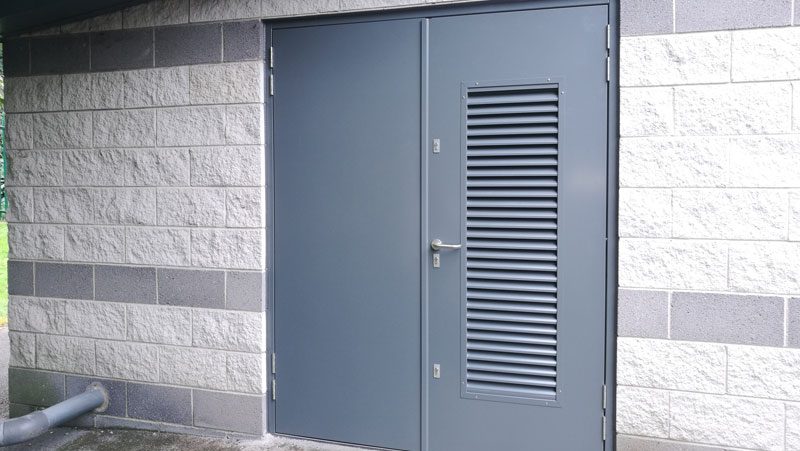
Sub-Station & Louvred Doors
Sub-station doors are designed for utility, plant, and electrical environments where security, ventilation, and durability can all be important. These doors help protect restricted areas while supporting the practical needs of the equipment inside.
Depending on the site, sub-station doors may need louvres for airflow, robust locking, clear signage, and corrosion-resistant finishes. They are usually specified carefully to suit operational and safety requirements.
Fire Certified Doors
Fire certified doors are designed and tested to provide fire resistance for a stated period. They are used where fire protection is part of the building’s safety strategy and must be correctly specified, installed, and maintained.
Key Features, Benefits, And Cost Considerations
The right steel security door should be built around the site. A door for a shared entrance will not need the same specification as a sub-station, and a fire exit door will have different requirements from a high security store room door.
Locking And Access Options
At About Security, we can fit a full range of furniture and locking options to suit domestic and commercial applications.
Common options include:
- Panic bars and push pads for emergency exits
- Mechanical locks for straightforward secure access
- Digital locks for keyless entry
- Electric release locks for controlled access
- Magnetic locks for access-controlled entrances
- Door closers for communal and fire safety use
- Security handles, hinges, and additional furniture
Practical Features
Steel doors can be tailored with features that improve usability, appearance, safety, and performance. The right combination depends on location, risk, foot traffic, and whether the door must meet fire, security, or ventilation requirements.
Useful features may include:
- Single or double door configurations
- Powder-coated finishes in suitable colours
- Louvered panels for ventilation
- Vision panels where visibility is useful
- Fire-rated options where required
- Heavy-duty frames and hinges
- Weather-resistant finishes for external use
- Access control compatibility
What Affects the Cost?
Steel security door costs vary because each site has different requirements. A simple general-purpose door will usually cost less than a certified fire door, high security door, or access-controlled communal entrance.
The main cost factors include:
- Door size and whether it is single or double
- Security rating or construction level
- Fire rating or certification requirements
- Locking system and access control hardware
- Panic furniture or emergency exit hardware
- Louvres, glazing, closers, and specialist features
- Finish, colour, and corrosion resistance
- Site conditions and installation complexity
The best approach is to specify the door properly from the start. This helps avoid overspending on features that are not needed, while making sure the door still meets the building’s security, access, and safety requirements.
Quality Steel Security Doors from About Security
Security steel doors are not a one-size-fits-all product. The right choice depends on the building, the level of risk, how the doorway is used, and whether fire safety, ventilation, or access control needs to be included.
At About Security, we install steel security doors across Bristol, the South West, and surrounding areas, helping domestic and commercial customers choose doors that are practical, secure, and suited to the site. To discuss steel security doors for your premises, contact our team.
